
Groundwater and accumulated water can create challenges during excavation, foundation construction and other building activities. When water enters a construction area, it can affect the working surface, soil conditions and the progress of planned site operations. This is why water management should be considered before excavation begins.
Construction site dewatering in Dubai involves more than simply pumping visible water out of an excavation. Contractors and project teams need to consider groundwater levels, soil characteristics, excavation depth, nearby structures and the approved method of water discharge.
Whether the project involves a residential villa, basement, commercial building or infrastructure development, the dewatering approach should be selected according to the actual site conditions and engineering requirements.
Construction site dewatering is the controlled removal or management of groundwater and accumulated water from a construction area. Common methods include sump pumping, wellpoint systems, deep well systems and surface water removal. In Dubai, contractors must also identify the relevant authority requirements and obtain the applicable approvals for groundwater pumping and discharge.
What Is Construction Site Dewatering?
Construction site dewatering is the process of removing or controlling groundwater and unwanted water from an excavation or construction area. Its purpose is to maintain working conditions suitable for activities such as excavation, foundation preparation and below-ground construction.
Water can enter a construction site through several sources, including:
- Groundwater seeping into an excavation.
- Rainwater collecting in low-lying areas.
- Surface runoff entering the working area.
- Water leakage from nearby sources or existing infrastructure.
The appropriate water-management approach depends on the source of the water, the rate at which it enters the site, soil permeability and the planned excavation depth.
Dewatering becomes particularly important when excavation extends below the groundwater level. In such cases, groundwater management needs to be coordinated with excavation support, shoring and foundation design.
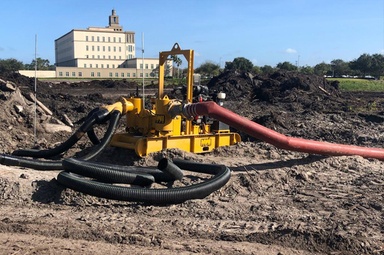
Why Is Dewatering Important for Construction Projects in Dubai?
Construction projects in Dubai can involve different soil conditions, excavation depths and groundwater situations. A pumping method that works for one site may not be suitable for another. Understanding the ground conditions is therefore an important part of construction planning.
Maintaining Suitable Excavation Conditions
Uncontrolled water entering an excavation can make ground preparation and construction activities more difficult. A suitable water-management arrangement helps maintain the working conditions required for the planned activities.
Supporting Foundation Construction
Some foundation activities require controlled groundwater conditions. The dewatering arrangement should be coordinated with the foundation design, excavation support system and instructions from the responsible engineer.
Reducing the Risk of Soil Movement
Poorly controlled pumping can remove fine soil particles along with groundwater. This may contribute to ground movement or settlement around an excavation. Monitoring and appropriate system design are important considerations, particularly where neighbouring structures are present.
Coordinating Construction Activities
Water management can help the site team coordinate excavation, foundation preparation and other construction activities. The dewatering programme should form part of the wider construction sequence rather than being treated as an isolated task.
Common Dewatering Methods Used on Construction Sites
The dewatering method should be selected by qualified project specialists after reviewing groundwater conditions, soil characteristics, excavation depth and the surrounding environment. The following are common approaches used or considered in construction projects.
1. Sump Pumping
Sump pumping collects water that enters a designated low point or collection area within a construction site. A pump transfers the collected water to an approved discharge destination.
This approach may be considered where water accumulation is manageable and ground conditions allow it. However, it is not automatically suitable for every excavation. If pumping causes soil particles to move with the water, it may create additional ground-stability concerns.
2. Wellpoint Dewatering
A wellpoint system uses a series of small-diameter wellpoints connected to a pumping arrangement. It is designed to lower groundwater levels within a selected working area.
The system layout and suitability depend on soil permeability, the required groundwater drawdown, excavation geometry and the conditions identified during the site investigation.
3. Deep Well Dewatering
Deep well systems use larger wells and pumping equipment to manage groundwater around deeper excavations or where a wider groundwater-control arrangement is required.
Their design requires specialist assessment. Factors such as aquifer characteristics, groundwater pressure, nearby structures and the planned excavation sequence must be considered before the system is selected.
4. Surface Water Removal
Surface water removal deals with water collecting on a construction site due to rainfall, runoff or other surface sources. Site drainage, collection points and suitable pumping arrangements may be used according to the site plan.
It is important to distinguish surface water management from lowering the groundwater table. They are different situations and may require different approaches.
Comparison of Common Dewatering Methods
| Method | General Application | Important Consideration |
|---|---|---|
| Sump pumping | Collecting and removing accumulated water. | Control of soil particles and ground stability. |
| Wellpoint system | Groundwater control in suitable soil conditions. | Ground permeability and required drawdown. |
| Deep well system | Groundwater management for deeper excavations. | Specialist design and groundwater monitoring. |
| Surface water removal | Rainwater and surface accumulation. | Drainage layout and approved discharge route. |
Dubai Groundwater and Dewatering Requirements
Contractors planning construction dewatering in Dubai should identify the relevant authority requirements before pumping and discharge arrangements are put into operation. Requirements may differ according to the project's location, authority jurisdiction and proposed discharge destination.
Dubai Municipality Permits and NOCs
Dubai Municipality's public services directory lists a Permit to Dewater Groundwater in Construction Sites. It also lists an NOC to Discharge Groundwater into Temporary Lagoons.
These are separate services. Contractors should confirm which approvals apply to their particular project rather than assuming that one approval covers every pumping and discharge arrangement.
The published service information can be reviewed through the Dubai Municipality services directory.
Discharge into the Rainwater Drainage Network
Dubai Local Order No. 8 of 2002 addresses the discharge of water from construction sites, projects and excavations. Article 27 requires written permission from the competent department before dewatering water is discharged into the rainwater drainage network.
The order also identifies details that may form part of the approved discharge arrangement, including dewatering points, pump capacity, pipe arrangements, authorised discharge locations and sedimentation tank specifications.
You can review the relevant provision in Dubai Local Order No. 8 of 2002.
Dubai Development Authority Projects
For projects falling under Dubai Development Authority jurisdiction, the authority publishes a separate Dewatering NOC service for discharge to the stormwater network or a temporary lagoon. The relevant application requirements and process should be checked for the specific project.
Further information is available from the Dubai Development Authority Dewatering NOC information.
What Does the Dubai Building Code Say About Dewatering?
The Dubai Building Code includes provisions dealing with groundwater control and dewatering. These provisions are important because pumping can affect not only the excavation but also nearby ground, utilities and structures.
The code addresses monitoring groundwater pressure and groundwater levels around excavations. It also highlights the importance of preventing fine soil particles from being removed during pumping, as this can contribute to unexpected settlement in surrounding areas.
The relevant technical requirements should be reviewed by the project's geotechnical specialist and engineer. The design, monitoring arrangements and approval process must be established for the actual project rather than copied from another construction site.
Reference: Dubai Building Code.
Factors to Consider Before Choosing a Dewatering System
Selecting a dewatering method is a technical decision. Before choosing a system, the project team should review the available site information and the planned construction sequence.
Groundwater Level
Groundwater conditions should be established before selecting a pumping arrangement. Possible changes during the project and surrounding site conditions may also need to be considered.
Soil Characteristics
Soil type and permeability influence how water moves through the ground and how a pumping system may perform. Soil investigation information can help specialists assess the appropriate approach.
Excavation Depth
The excavation depth and geometry influence groundwater-control requirements and the type of system that may be considered.
Nearby Structures and Utilities
Existing buildings, retaining structures and underground utilities may need monitoring and protection during dewatering operations. Groundwater changes should be considered in the context of surrounding assets.
Discharge Destination
The intended discharge location should be identified early so the relevant approvals and arrangements can be confirmed. Water should not be discharged to an unauthorised location.
Construction Programme
The dewatering plan should be coordinated with excavation, foundation construction and the approved sequence for stopping pumping. The responsible engineer should determine when groundwater control can safely be discontinued.
Common Dewatering Planning Mistakes to Avoid
Water removal may appear straightforward, but an unsuitable arrangement can create problems for the construction team and surrounding area. The following issues should be considered during planning.
- Starting without understanding groundwater conditions: A pumping arrangement should be based on site information and the required groundwater-control objective.
- Using an unsuitable pumping method: A system suitable for surface water may not be appropriate for groundwater control around a deep excavation.
- Ignoring soil movement: Pumping that removes fine soil particles can create additional risks for the excavation and nearby structures.
- Overlooking discharge approvals: Removing water from an excavation does not mean it can be discharged to any convenient location.
- Stopping pumping without approval: The responsible engineer must determine when groundwater control can safely be discontinued.
- Failing to coordinate site activities: Dewatering, excavation, shoring and foundation work should be planned as connected construction activities.
Dewatering Services for Construction Sites in Dubai
Hammad Akhtar Transport LLC includes construction site dewatering among its services in Dubai and the UAE. The company's service information covers water removal and groundwater management requirements for construction sites.
The service scope described by the company includes surface water removal, groundwater control, pump installation and monitoring, and temporary site drainage arrangements. The appropriate scope depends on the project requirements and site conditions.
For a dewatering enquiry, the project team should share the site location, excavation details, known groundwater conditions and intended discharge arrangements. This information helps establish what support may be required.
You can learn more about dewatering of construction sites in Dubai or explore the company's other services.
Information to Prepare Before Requesting a Dewatering Enquiry
Providing clear project information helps a service provider understand the work being considered. Where available, prepare the following details before making an enquiry:
- Project location and site access information.
- Type of project, such as a villa, building or infrastructure site.
- Excavation depth and approximate working area.
- Available soil investigation and groundwater information.
- Current water accumulation or groundwater concerns.
- Proposed discharge destination and any authority requirements already identified.
- Project drawings, specifications or relevant consultant instructions.
- Expected work programme and coordination requirements.
The final system design, technical monitoring and approval requirements should be established by the responsible qualified specialists and project authorities.
Frequently Asked Questions About Dewatering in Dubai
1. What is construction site dewatering?
Construction site dewatering is the controlled removal or management of groundwater and accumulated water from an excavation or construction area to maintain conditions suitable for planned construction activities.
2. When is dewatering required on a construction site?
Dewatering may be required when groundwater or accumulated water affects excavation, foundation work or other site activities. The need should be assessed using the project's ground investigation and construction design.
3. Which dewatering methods are used in Dubai?
Methods considered on construction sites include sump pumping, wellpoint systems, deep well systems and surface water removal. The appropriate approach depends on groundwater conditions, soil characteristics and excavation requirements.
4. Is a permit required for groundwater dewatering in Dubai?
Dubai Municipality lists a permit service for groundwater dewatering at construction sites. Contractors should confirm the applicable authority and approval requirements for their specific project.
5. Can construction groundwater be discharged into the rainwater network?
Dubai Local Order No. 8 of 2002 requires written permission from the competent department before dewatering water from construction sites or excavations is discharged into the rainwater drainage network.
6. What information is needed to plan dewatering?
Relevant information includes groundwater levels, soil conditions, excavation depth, nearby structures, the construction sequence and the proposed water discharge destination.
7. Does dewatering affect nearby buildings?
It can, depending on ground conditions and the dewatering arrangement. The Dubai Building Code addresses groundwater monitoring and the prevention of fine soil particle loss because uncontrolled dewatering may contribute to settlement around excavations.
8. Does Hammad Akhtar Transport LLC provide dewatering services in Dubai?
Hammad Akhtar Transport LLC lists construction site dewatering among its services. Contact the company to discuss your location, site conditions and project requirements.
Conclusion
Construction site dewatering in Dubai requires careful planning, suitable groundwater-control methods and attention to the applicable discharge requirements. The right approach depends on the site's soil conditions, groundwater level, excavation design and surrounding environment.
By considering these factors early, project teams can make better-informed decisions about water management and coordinate dewatering with excavation and foundation activities.
For information about construction site dewatering, visit Hammad Akhtar Transport LLC's dewatering service page or contact the company to discuss your project requirements.
Groundwater and accumulated water can create challenges during excavation, foundation construction and other building activities. When water enters a construction area, it can affect the working surface, soil conditions and the progress of planned site operations. This is why water management should be considered before excavation begins.
Construction site dewatering in Dubai involves more than simply pumping visible water out of an excavation. Contractors and project teams need to consider groundwater levels, soil characteristics, excavation depth, nearby structures and the approved method of water discharge.
Whether the project involves a residential villa, basement, commercial building or infrastructure development, the dewatering approach should be selected according to the actual site conditions and engineering requirements.
Construction site dewatering is the controlled removal or management of groundwater and accumulated water from a construction area. Common methods include sump pumping, wellpoint systems, deep well systems and surface water removal. In Dubai, contractors must also identify the relevant authority requirements and obtain the applicable approvals for groundwater pumping and discharge.
What Is Construction Site Dewatering?
Construction site dewatering is the process of removing or controlling groundwater and unwanted water from an excavation or construction area. Its purpose is to maintain working conditions suitable for activities such as excavation, foundation preparation and below-ground construction.
Water can enter a construction site through several sources, including:
- Groundwater seeping into an excavation.
- Rainwater collecting in low-lying areas.
- Surface runoff entering the working area.
- Water leakage from nearby sources or existing infrastructure.
The appropriate water-management approach depends on the source of the water, the rate at which it enters the site, soil permeability and the planned excavation depth.
Dewatering becomes particularly important when excavation extends below the groundwater level. In such cases, groundwater management needs to be coordinated with excavation support, shoring and foundation design.
Why Is Dewatering Important for Construction Projects in Dubai?
Construction projects in Dubai can involve different soil conditions, excavation depths and groundwater situations. A pumping method that works for one site may not be suitable for another. Understanding the ground conditions is therefore an important part of construction planning.
Maintaining Suitable Excavation Conditions
Uncontrolled water entering an excavation can make ground preparation and construction activities more difficult. A suitable water-management arrangement helps maintain the working conditions required for the planned activities.
Supporting Foundation Construction
Some foundation activities require controlled groundwater conditions. The dewatering arrangement should be coordinated with the foundation design, excavation support system and instructions from the responsible engineer.
Reducing the Risk of Soil Movement
Poorly controlled pumping can remove fine soil particles along with groundwater. This may contribute to ground movement or settlement around an excavation. Monitoring and appropriate system design are important considerations, particularly where neighbouring structures are present.
Coordinating Construction Activities
Water management can help the site team coordinate excavation, foundation preparation and other construction activities. The dewatering programme should form part of the wider construction sequence rather than being treated as an isolated task.
Common Dewatering Methods Used on Construction Sites
The dewatering method should be selected by qualified project specialists after reviewing groundwater conditions, soil characteristics, excavation depth and the surrounding environment. The following are common approaches used or considered in construction projects.
1. Sump Pumping
Sump pumping collects water that enters a designated low point or collection area within a construction site. A pump transfers the collected water to an approved discharge destination.
This approach may be considered where water accumulation is manageable and ground conditions allow it. However, it is not automatically suitable for every excavation. If pumping causes soil particles to move with the water, it may create additional ground-stability concerns.
2. Wellpoint Dewatering
A wellpoint system uses a series of small-diameter wellpoints connected to a pumping arrangement. It is designed to lower groundwater levels within a selected working area.
The system layout and suitability depend on soil permeability, the required groundwater drawdown, excavation geometry and the conditions identified during the site investigation.
3. Deep Well Dewatering
Deep well systems use larger wells and pumping equipment to manage groundwater around deeper excavations or where a wider groundwater-control arrangement is required.
Their design requires specialist assessment. Factors such as aquifer characteristics, groundwater pressure, nearby structures and the planned excavation sequence must be considered before the system is selected.
4. Surface Water Removal
Surface water removal deals with water collecting on a construction site due to rainfall, runoff or other surface sources. Site drainage, collection points and suitable pumping arrangements may be used according to the site plan.
It is important to distinguish surface water management from lowering the groundwater table. They are different situations and may require different approaches.
Comparison of Common Dewatering Methods
| Method | General Application | Important Consideration |
|---|---|---|
| Sump pumping | Collecting and removing accumulated water. | Control of soil particles and ground stability. |
| Wellpoint system | Groundwater control in suitable soil conditions. | Ground permeability and required drawdown. |
| Deep well system | Groundwater management for deeper excavations. | Specialist design and groundwater monitoring. |
| Surface water removal | Rainwater and surface accumulation. | Drainage layout and approved discharge route. |
Dubai Groundwater and Dewatering Requirements
Contractors planning construction dewatering in Dubai should identify the relevant authority requirements before pumping and discharge arrangements are put into operation. Requirements may differ according to the project's location, authority jurisdiction and proposed discharge destination.
Dubai Municipality Permits and NOCs
Dubai Municipality's public services directory lists a Permit to Dewater Groundwater in Construction Sites. It also lists an NOC to Discharge Groundwater into Temporary Lagoons.
These are separate services. Contractors should confirm which approvals apply to their particular project rather than assuming that one approval covers every pumping and discharge arrangement.
The published service information can be reviewed through the Dubai Municipality services directory.
Discharge into the Rainwater Drainage Network
Dubai Local Order No. 8 of 2002 addresses the discharge of water from construction sites, projects and excavations. Article 27 requires written permission from the competent department before dewatering water is discharged into the rainwater drainage network.
The order also identifies details that may form part of the approved discharge arrangement, including dewatering points, pump capacity, pipe arrangements, authorised discharge locations and sedimentation tank specifications.
You can review the relevant provision in Dubai Local Order No. 8 of 2002.
Dubai Development Authority Projects
For projects falling under Dubai Development Authority jurisdiction, the authority publishes a separate Dewatering NOC service for discharge to the stormwater network or a temporary lagoon. The relevant application requirements and process should be checked for the specific project.
Further information is available from the Dubai Development Authority Dewatering NOC information.
What Does the Dubai Building Code Say About Dewatering?
The Dubai Building Code includes provisions dealing with groundwater control and dewatering. These provisions are important because pumping can affect not only the excavation but also nearby ground, utilities and structures.
The code addresses monitoring groundwater pressure and groundwater levels around excavations. It also highlights the importance of preventing fine soil particles from being removed during pumping, as this can contribute to unexpected settlement in surrounding areas.
The relevant technical requirements should be reviewed by the project's geotechnical specialist and engineer. The design, monitoring arrangements and approval process must be established for the actual project rather than copied from another construction site.
Reference: Dubai Building Code.
Factors to Consider Before Choosing a Dewatering System
Selecting a dewatering method is a technical decision. Before choosing a system, the project team should review the available site information and the planned construction sequence.
Groundwater Level
Groundwater conditions should be established before selecting a pumping arrangement. Possible changes during the project and surrounding site conditions may also need to be considered.
Soil Characteristics
Soil type and permeability influence how water moves through the ground and how a pumping system may perform. Soil investigation information can help specialists assess the appropriate approach.
Excavation Depth
The excavation depth and geometry influence groundwater-control requirements and the type of system that may be considered.
Nearby Structures and Utilities
Existing buildings, retaining structures and underground utilities may need monitoring and protection during dewatering operations. Groundwater changes should be considered in the context of surrounding assets.
Discharge Destination
The intended discharge location should be identified early so the relevant approvals and arrangements can be confirmed. Water should not be discharged to an unauthorised location.
Construction Programme
The dewatering plan should be coordinated with excavation, foundation construction and the approved sequence for stopping pumping. The responsible engineer should determine when groundwater control can safely be discontinued.
Common Dewatering Planning Mistakes to Avoid
Water removal may appear straightforward, but an unsuitable arrangement can create problems for the construction team and surrounding area. The following issues should be considered during planning.
- Starting without understanding groundwater conditions: A pumping arrangement should be based on site information and the required groundwater-control objective.
- Using an unsuitable pumping method: A system suitable for surface water may not be appropriate for groundwater control around a deep excavation.
- Ignoring soil movement: Pumping that removes fine soil particles can create additional risks for the excavation and nearby structures.
- Overlooking discharge approvals: Removing water from an excavation does not mean it can be discharged to any convenient location.
- Stopping pumping without approval: The responsible engineer must determine when groundwater control can safely be discontinued.
- Failing to coordinate site activities: Dewatering, excavation, shoring and foundation work should be planned as connected construction activities.
Dewatering Services for Construction Sites in Dubai
Hammad Akhtar Transport LLC includes construction site dewatering among its services in Dubai and the UAE. The company's service information covers water removal and groundwater management requirements for construction sites.
The service scope described by the company includes surface water removal, groundwater control, pump installation and monitoring, and temporary site drainage arrangements. The appropriate scope depends on the project requirements and site conditions.
For a dewatering enquiry, the project team should share the site location, excavation details, known groundwater conditions and intended discharge arrangements. This information helps establish what support may be required.
You can learn more about dewatering of construction sites in Dubai or explore the company's other services.
Information to Prepare Before Requesting a Dewatering Enquiry
Providing clear project information helps a service provider understand the work being considered. Where available, prepare the following details before making an enquiry:
- Project location and site access information.
- Type of project, such as a villa, building or infrastructure site.
- Excavation depth and approximate working area.
- Available soil investigation and groundwater information.
- Current water accumulation or groundwater concerns.
- Proposed discharge destination and any authority requirements already identified.
- Project drawings, specifications or relevant consultant instructions.
- Expected work programme and coordination requirements.
The final system design, technical monitoring and approval requirements should be established by the responsible qualified specialists and project authorities.
Frequently Asked Questions About Dewatering in Dubai
1. What is construction site dewatering?
Construction site dewatering is the controlled removal or management of groundwater and accumulated water from an excavation or construction area to maintain conditions suitable for planned construction activities.
2. When is dewatering required on a construction site?
Dewatering may be required when groundwater or accumulated water affects excavation, foundation work or other site activities. The need should be assessed using the project's ground investigation and construction design.
3. Which dewatering methods are used in Dubai?
Methods considered on construction sites include sump pumping, wellpoint systems, deep well systems and surface water removal. The appropriate approach depends on groundwater conditions, soil characteristics and excavation requirements.
4. Is a permit required for groundwater dewatering in Dubai?
Dubai Municipality lists a permit service for groundwater dewatering at construction sites. Contractors should confirm the applicable authority and approval requirements for their specific project.
5. Can construction groundwater be discharged into the rainwater network?
Dubai Local Order No. 8 of 2002 requires written permission from the competent department before dewatering water from construction sites or excavations is discharged into the rainwater drainage network.
6. What information is needed to plan dewatering?
Relevant information includes groundwater levels, soil conditions, excavation depth, nearby structures, the construction sequence and the proposed water discharge destination.
7. Does dewatering affect nearby buildings?
It can, depending on ground conditions and the dewatering arrangement. The Dubai Building Code addresses groundwater monitoring and the prevention of fine soil particle loss because uncontrolled dewatering may contribute to settlement around excavations.
8. Does Hammad Akhtar Transport LLC provide dewatering services in Dubai?
Hammad Akhtar Transport LLC lists construction site dewatering among its services. Contact the company to discuss your location, site conditions and project requirements.
Conclusion
Construction site dewatering in Dubai requires careful planning, suitable groundwater-control methods and attention to the applicable discharge requirements. The right approach depends on the site's soil conditions, groundwater level, excavation design and surrounding environment.
By considering these factors early, project teams can make better-informed decisions about water management and coordinate dewatering with excavation and foundation activities.
For information about construction site dewatering, visit Hammad Akhtar Transport LLC's dewatering service page or contact the company to discuss your project requirements.