
A backfill delivery can look straightforward: the tipper arrives, the sand is unloaded, and the team starts spreading it. But if the material is unsuitable or the ground is not ready, problems can appear later as settlement, uneven levels or repeated repair work.
Key takeaways
- Choose backfill sand by its test results and approved project specification, not by appearance alone.
- Remove unsuitable material and deal with standing water before placing new fill.
- Place sand in controlled layers and compact each layer using an appropriate method.
- Plan supply, truck access and site timing before the first delivery arrives.
What makes sand a suitable backfill material?
Sand is often considered for backfilling because granular material can be placed and compacted in controlled layers. Its suitability, however, depends on the location and purpose of the fill. Material beside a foundation, beneath a floor slab and around buried services may have different project requirements.
A suitable material should be consistent with the approved specification and free from unwanted organic matter, rubbish and other deteriorating substances. Particle-size distribution, plasticity, moisture behaviour and soluble salts may all affect whether a particular source is acceptable.
Do not assume that any sand delivered to a Dubai site is suitable for every backfilling activity. Ask for the required material information and have the consultant or responsible specialist confirm its acceptance before the material is placed.
How should you choose backfill sand in Dubai?
Start with the project specification and geotechnical report. These documents should guide the required material properties and testing. A visual check is useful when a truck arrives, but it cannot replace laboratory testing where testing is specified.
Which material properties should be checked?
- Grading: Particle-size distribution affects how the material behaves during placement and compaction. The required grading should come from the project specification.
- Cleanliness: Organic matter, rubbish and deteriorating material should not be mixed into approved backfill.
- Fine particles and silt: Excess fines can change drainage and moisture behaviour. The acceptable amount depends on the specified material classification and test limits.
- Soluble salts: Salt content matters in Dubai because the local ground and groundwater can present chemical exposure concerns. Use the specified test and acceptance limit.
- Moisture: Water content affects compaction. Material that is too wet or too dry may not achieve the required result using the planned method.
- Consistency between loads: A change in source or material appearance should be raised with the site team rather than silently mixed into an approved supply.
Is local sand always better than washed or imported sand?
Not automatically. Dubai’s Building Code describes the region’s calcareous soil conditions, but that does not mean every locally available sand source has the same grading, cleanliness or chemical properties. Equally, the words “washed” or “imported” do not prove that a material meets a particular project specification.
Compare the actual test results and source information. If the specification calls for a particular grading or limit on fines and soluble salts, the supplier should provide evidence that the proposed material meets those requirements.
| Material description | What to check | Practical decision |
|---|---|---|
| Locally sourced sand | Grading, fines, organic matter and soluble salts | Use only when accepted against the project specification. |
| Washed sand | Grading after processing, remaining fines and chemical limits | Washing alone does not establish suitability. |
| Imported sand | Source details, consistency and laboratory test results | Assess the test evidence, not the country of origin. |
| Site-won material | Soil classification and all required laboratory checks | Do not reuse without the required specialist assessment and approval. |
Dubai’s Administrative Resolution No. 37 of 2021 sets out requirements for selected backfill materials in its stated context. It refers to sand or granular mixtures free from organic or deteriorating substances and specifies limits for plasticity, particle size, organic content and water-soluble salts. The applicable clause and project conditions should be checked by the project consultant before use.
How should the site be prepared before sand is placed?
Good material cannot correct a poorly prepared formation. Before arranging backfill sand supply in Dubai, the site team should confirm that the area is ready to receive it.
Clear and inspect the receiving area
Remove loose rubbish, timber, packaging, organic material and other unsuitable debris. Check the formation level and compare it with the approved drawings. If the ground contains soft, disturbed or visibly unsuitable material, ask the responsible engineer how it should be treated.
Check the structure, waterproofing and services
Where backfill is placed against a wall or around a foundation, confirm that the relevant concrete, waterproofing and protection works have been inspected and accepted. Identify pipes, cables, drainage lines and other buried services before machinery starts spreading material. The approved drawings and site instructions should determine the required clearances and protection.
Deal with standing water and groundwater
Do not place fill into an area with uncontrolled standing water. The site team should establish where the water is coming from and whether it is surface water, leakage or groundwater. If groundwater control is required, the dewatering arrangement should be designed and managed by the responsible specialist.
Dubai’s Building Code identifies saline groundwater as a local geotechnical consideration. It also requires dewatering design to consider loss of soft soil and possible effects on nearby structures. Pumping without suitable control can remove fine particles and contribute to ground movement.
For projects that need groundwater control, review the site dewatering services in Dubai information and coordinate the work with the project engineer.
How is backfill sand placed around foundations and services?
Once the receiving area and material have been accepted, placement should follow the approved method statement. The objective is to distribute the material evenly without damaging walls, waterproofing, pipes or other completed work.
Sand is normally placed in controlled layers rather than tipped into one deep section and left for a machine to push around. Dubai’s 2021 administrative resolution specifies layer thickness of 150 mm to 250 mm for the backfilling context covered by that provision. The project documents and applicable authority requirements must still be checked for the particular work.
Around pipes and narrow spaces, the placement method and compaction equipment need particular care. Heavy equipment may not be suitable close to a vulnerable service or wall. The approved drawings and method statement should identify how these areas are to be filled.
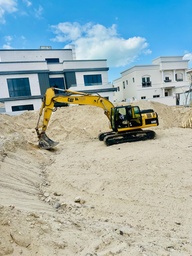
How is sand backfill compacted and tested?
Compaction reduces the air spaces between particles and helps the placed material achieve the density required by the project. The correct equipment depends on the material, working space, layer depth and nearby structures. A large roller is not the answer for every location.
Which equipment may be used?
| Equipment or method | Typical application | Site consideration |
|---|---|---|
| Vibratory roller | Open areas with suitable access | Check the specified material, vibration effect and working clearance. |
| Plate compactor | Smaller or restricted areas | Confirm that the selected unit is suitable for the layer and material. |
| Rammer | Narrow areas and selected confined spaces | Use carefully around pipes and structural elements. |
| Field density testing | Checking the compacted layer | Test method and frequency are set by the specification and engineer. |
What does a Proctor test tell the site team?
A laboratory compaction test establishes a relationship between moisture content and dry density for the tested material and compaction effort. The resulting maximum dry density and optimum moisture content can be used as reference values when the project specification sets a percentage compaction requirement.
Field density testing then checks the material as placed on site. A sand-cone test is one recognised method. A nuclear density gauge may also be specified where the testing procedure, equipment and applicable requirements permit its use. The project specification determines the accepted method and testing frequency.
Dubai’s 2021 resolution includes a minimum 95% of maximum dry density and a 150–250 mm layer range in the specific backfilling provision described above. These figures should not be copied blindly into every job: confirm the applicable clause, material, compaction reference and consultant’s project specification.
What sand backfilling mistakes should you avoid?
Many avoidable problems begin before compaction starts. Ordering material without confirming its specification can lead to rejected loads or delays. Placing fill over debris, soft ground or standing water can also undermine the work.
- Choosing by appearance: A clean-looking load is not proof of grading or chemical compliance. Request the specified test information.
- Mixing different sources without review: A change in source can mean a change in material properties. Refer it to the consultant.
- Placing excessive layer depths: Thick layers may not compact uniformly. Follow the approved layer thickness.
- Ignoring moisture: Compaction results depend on moisture conditions. Follow the material test and site instructions.
- Using unsuitable equipment in tight areas: Heavy equipment can damage services, waterproofing or structures. Select equipment for the available space.
- Covering a layer before inspection: Allow specified testing and approval before placing the next layer.
How are backfill sand supply and hauling planned in Dubai?
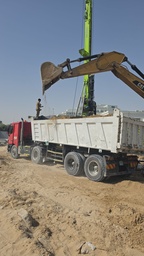
Sand supply is a site-planning task as much as a material order. The required quantity, approved source, loading arrangements, truck access and delivery sequence all affect how smoothly the work proceeds. The site team should agree the delivery plan before vehicles are dispatched.
Tipper truck selection and trip planning depend on the site entrance, turning space, unloading area, route restrictions and the receiving team's capacity. A delivery schedule should avoid sending more material than the site can safely receive and spread.
![tipper truck and sand Services in dubai]](https://www.hammadakhtartransportllc.com/web/image/1695-91f497af/Excavation%20%26%20Backfilling%20for%20Residential%20Villas%20in%20Mirdif%2C%20Dubai%203.jpeg?height=256)
What does Dubai Municipality say about sand supply?
At the time of writing, Dubai Municipality’s public services directory lists a service called Obtain Sand for Under Construction Projects. The directory describes it as approval to supply sand to manufacturers and under-construction projects in Dubai, with a published service estimate of five working days.
The directory also lists a separate Permit for Sand Shift from Under Construction Projects. It identifies building contractors as the applicants and gives a published estimate of two or three working days. Sand supply and removal are therefore listed as separate services; do not assume that one approval covers both activities.
The linked service pages currently direct users to the general Municipality portal, so the exact live application route, documents, fees and eligibility details should be checked directly with Dubai Municipality before work starts. Processing estimates can change and are not a promise of approval by a particular date.
Projects in areas managed by another authority or master developer may have additional requirements. Confirm which authority applies to the plot and whether any separate movement, disposal or site-access approvals are required.
For transport planning, see the company's sand shifting and transportation services in the UAE page.
What affects the cost of backfill sand supply and placement?
There is no single rate that applies to every backfilling job. The final scope depends on the material specification, quantity and site conditions. When requesting a quotation, provide enough information for the supplier or contractor to understand the actual work.
- Required sand type, source and testing requirements.
- Estimated volume and whether material is supplied, hauled or both.
- Distance between the loading source and the project site.
- Truck access, unloading space and site restrictions.
- Number and timing of deliveries.
- Whether spreading, placing, compaction or other equipment is included in the requested scope.
- Any special inspection, testing or coordination requirements.
How do you choose a backfilling contractor in Dubai?
Ask practical questions before confirming the work. A contractor should understand the site access, material requirements and agreed scope rather than treating every delivery as a simple truck movement.
- Can the contractor explain the agreed scope: supply, hauling, placement or a combination?
- Can the proposed material be checked against the project specification?
- Are the truck type and equipment suitable for the site entrance and working area?
- Who coordinates inspections and field density testing?
- How will delivery timing be coordinated with the site team?
- Are the required authority permissions and site instructions being checked by the responsible parties?
What is the usual sequence for a sand backfilling job?
- Review the documents. Check the drawings, geotechnical report, material specification and approved method statement.
- Confirm the material. Agree the source and obtain the required test information and acceptance.
- Prepare the receiving area. Clear debris, inspect the formation and confirm that water and service issues have been addressed.
- Coordinate delivery. Confirm truck access, unloading arrangements, timing and the quantity the site can receive.
- Place in layers. Spread the material evenly in the specified layer thickness.
- Compact and test. Use the approved equipment and testing method for the material and location.
- Obtain acceptance. Complete the required inspection and test records before covering the layer with the next one.
Before the first truck arrives
- Approved drawings and backfilling method statement are available.
- Material source and specification have been confirmed.
- Required material test documents have been reviewed.
- Receiving area is cleared and inspected.
- Water, drainage and dewatering arrangements have been addressed.
- Buried services and completed waterproofing are protected.
- Truck access and unloading space are ready.
- Spreading and compaction equipment are suitable for the work area.
- Inspection and field testing arrangements are agreed.
How Hammad Akhtar Transport can help
Hammad Akhtar Transport LLC provides excavation, backfilling, sand shifting and transportation services in Dubai. The company's equipment includes excavators, wheel loaders, backhoe loaders, skid steer loaders, tipper trucks and dump trucks.
The required scope can be discussed according to the site conditions and project instructions. If you need sand transported to a site, excavated material shifted or equipment for earthwork activities, share the location, access details and requested scope so the requirements can be reviewed.
You can also read about excavation services in the UAE and construction waste removal services. For a wider explanation of the subject, see the excavation and backfilling guide and What Is Backfilling in Construction?.
Frequently asked questions about backfill sand in Dubai
1. What sand is best for backfilling in Dubai?
The best sand is the material that meets the project's approved grading, cleanliness, plasticity, soluble-salt and compaction requirements. There is no universal sand type for every site. Check the geotechnical report, material test results and consultant's specification before ordering.
2. Can excavated soil be reused for backfilling?
Excavated soil should not automatically be reused. Its suitability depends on classification, laboratory results and the project specification. Dubai's building requirements call for specialist assessment of site-won material before it is accepted for general backfilling.
3. How thick should each sand backfill layer be?
Layer thickness depends on the applicable project requirements and compaction method. Dubai's 2021 administrative resolution specifies 150 to 250 mm for the backfilling provision it covers. Always confirm the relevant clause and consultant's specification for your site.
4. How is sand backfill compaction tested?
The project may require laboratory moisture-density testing and field density checks. A sand-cone test is one recognised field method. The consultant or specification determines the accepted testing method, frequency and required compaction result.
5. Does Dubai Municipality require approval for sand supply?
Dubai Municipality's public service directory lists an approval service for supplying sand to manufacturers and under-construction projects. The current application route, documents, eligibility and fees should be confirmed directly with the Municipality before arranging supply.
6. Does groundwater affect sand backfilling in Dubai?
Yes. Groundwater conditions can affect excavation stability, material placement and nearby structures. Dubai's Building Code identifies saline groundwater as a local consideration. Where groundwater control is needed, dewatering should be designed and managed by the responsible specialist.
7. What information should I provide when requesting backfill sand supply?
Share the project location, required material specification, estimated quantity, delivery access, unloading arrangements and requested scope. Explain whether you need supply only, transportation, placement or compaction so the work can be reviewed against the site requirements.
Need Backfill Sand or Transportation Support in Dubai?
Discuss your sand supply, hauling, excavation or backfilling requirements with Hammad Akhtar Transport LLC.
A backfill delivery can look straightforward: the tipper arrives, the sand is unloaded, and the team starts spreading it. But if the material is unsuitable or the ground is not ready, problems can appear later as settlement, uneven levels or repeated repair work.
Key takeaways
- Choose backfill sand by its test results and approved project specification, not by appearance alone.
- Remove unsuitable material and deal with standing water before placing new fill.
- Place sand in controlled layers and compact each layer using an appropriate method.
- Plan supply, truck access and site timing before the first delivery arrives.
What makes sand a suitable backfill material?
Sand is often considered for backfilling because granular material can be placed and compacted in controlled layers. Its suitability, however, depends on the location and purpose of the fill. Material beside a foundation, beneath a floor slab and around buried services may have different project requirements.
A suitable material should be consistent with the approved specification and free from unwanted organic matter, rubbish and other deteriorating substances. Particle-size distribution, plasticity, moisture behaviour and soluble salts may all affect whether a particular source is acceptable.
Do not assume that any sand delivered to a Dubai site is suitable for every backfilling activity. Ask for the required material information and have the consultant or responsible specialist confirm its acceptance before the material is placed.
How should you choose backfill sand in Dubai?
Start with the project specification and geotechnical report. These documents should guide the required material properties and testing. A visual check is useful when a truck arrives, but it cannot replace laboratory testing where testing is specified.
Which material properties should be checked?
- Grading: Particle-size distribution affects how the material behaves during placement and compaction. The required grading should come from the project specification.
- Cleanliness: Organic matter, rubbish and deteriorating material should not be mixed into approved backfill.
- Fine particles and silt: Excess fines can change drainage and moisture behaviour. The acceptable amount depends on the specified material classification and test limits.
- Soluble salts: Salt content matters in Dubai because the local ground and groundwater can present chemical exposure concerns. Use the specified test and acceptance limit.
- Moisture: Water content affects compaction. Material that is too wet or too dry may not achieve the required result using the planned method.
- Consistency between loads: A change in source or material appearance should be raised with the site team rather than silently mixed into an approved supply.
Is local sand always better than washed or imported sand?
Not automatically. Dubai’s Building Code describes the region’s calcareous soil conditions, but that does not mean every locally available sand source has the same grading, cleanliness or chemical properties. Equally, the words “washed” or “imported” do not prove that a material meets a particular project specification.
Compare the actual test results and source information. If the specification calls for a particular grading or limit on fines and soluble salts, the supplier should provide evidence that the proposed material meets those requirements.
| Material description | What to check | Practical decision |
|---|---|---|
| Locally sourced sand | Grading, fines, organic matter and soluble salts | Use only when accepted against the project specification. |
| Washed sand | Grading after processing, remaining fines and chemical limits | Washing alone does not establish suitability. |
| Imported sand | Source details, consistency and laboratory test results | Assess the test evidence, not the country of origin. |
| Site-won material | Soil classification and all required laboratory checks | Do not reuse without the required specialist assessment and approval. |
Dubai’s Administrative Resolution No. 37 of 2021 sets out requirements for selected backfill materials in its stated context. It refers to sand or granular mixtures free from organic or deteriorating substances and specifies limits for plasticity, particle size, organic content and water-soluble salts. The applicable clause and project conditions should be checked by the project consultant before use.
How should the site be prepared before sand is placed?
Good material cannot correct a poorly prepared formation. Before arranging backfill sand supply in Dubai, the site team should confirm that the area is ready to receive it.
Clear and inspect the receiving area
Remove loose rubbish, timber, packaging, organic material and other unsuitable debris. Check the formation level and compare it with the approved drawings. If the ground contains soft, disturbed or visibly unsuitable material, ask the responsible engineer how it should be treated.
Check the structure, waterproofing and services
Where backfill is placed against a wall or around a foundation, confirm that the relevant concrete, waterproofing and protection works have been inspected and accepted. Identify pipes, cables, drainage lines and other buried services before machinery starts spreading material. The approved drawings and site instructions should determine the required clearances and protection.
Deal with standing water and groundwater
Do not place fill into an area with uncontrolled standing water. The site team should establish where the water is coming from and whether it is surface water, leakage or groundwater. If groundwater control is required, the dewatering arrangement should be designed and managed by the responsible specialist.
Dubai’s Building Code identifies saline groundwater as a local geotechnical consideration. It also requires dewatering design to consider loss of soft soil and possible effects on nearby structures. Pumping without suitable control can remove fine particles and contribute to ground movement.
For projects that need groundwater control, review the site dewatering services in Dubai information and coordinate the work with the project engineer.
How is backfill sand placed around foundations and services?
Once the receiving area and material have been accepted, placement should follow the approved method statement. The objective is to distribute the material evenly without damaging walls, waterproofing, pipes or other completed work.
Sand is normally placed in controlled layers rather than tipped into one deep section and left for a machine to push around. Dubai’s 2021 administrative resolution specifies layer thickness of 150 mm to 250 mm for the backfilling context covered by that provision. The project documents and applicable authority requirements must still be checked for the particular work.
Around pipes and narrow spaces, the placement method and compaction equipment need particular care. Heavy equipment may not be suitable close to a vulnerable service or wall. The approved drawings and method statement should identify how these areas are to be filled.
How is sand backfill compacted and tested?
Compaction reduces the air spaces between particles and helps the placed material achieve the density required by the project. The correct equipment depends on the material, working space, layer depth and nearby structures. A large roller is not the answer for every location.
Which equipment may be used?
| Equipment or method | Typical application | Site consideration |
|---|---|---|
| Vibratory roller | Open areas with suitable access | Check the specified material, vibration effect and working clearance. |
| Plate compactor | Smaller or restricted areas | Confirm that the selected unit is suitable for the layer and material. |
| Rammer | Narrow areas and selected confined spaces | Use carefully around pipes and structural elements. |
| Field density testing | Checking the compacted layer | Test method and frequency are set by the specification and engineer. |
What does a Proctor test tell the site team?
A laboratory compaction test establishes a relationship between moisture content and dry density for the tested material and compaction effort. The resulting maximum dry density and optimum moisture content can be used as reference values when the project specification sets a percentage compaction requirement.
Field density testing then checks the material as placed on site. A sand-cone test is one recognised method. A nuclear density gauge may also be specified where the testing procedure, equipment and applicable requirements permit its use. The project specification determines the accepted method and testing frequency.
Dubai’s 2021 resolution includes a minimum 95% of maximum dry density and a 150–250 mm layer range in the specific backfilling provision described above. These figures should not be copied blindly into every job: confirm the applicable clause, material, compaction reference and consultant’s project specification.
What sand backfilling mistakes should you avoid?
Many avoidable problems begin before compaction starts. Ordering material without confirming its specification can lead to rejected loads or delays. Placing fill over debris, soft ground or standing water can also undermine the work.
- Choosing by appearance: A clean-looking load is not proof of grading or chemical compliance. Request the specified test information.
- Mixing different sources without review: A change in source can mean a change in material properties. Refer it to the consultant.
- Placing excessive layer depths: Thick layers may not compact uniformly. Follow the approved layer thickness.
- Ignoring moisture: Compaction results depend on moisture conditions. Follow the material test and site instructions.
- Using unsuitable equipment in tight areas: Heavy equipment can damage services, waterproofing or structures. Select equipment for the available space.
- Covering a layer before inspection: Allow specified testing and approval before placing the next layer.
How are backfill sand supply and hauling planned in Dubai?
Sand supply is a site-planning task as much as a material order. The required quantity, approved source, loading arrangements, truck access and delivery sequence all affect how smoothly the work proceeds. The site team should agree the delivery plan before vehicles are dispatched.
Tipper truck selection and trip planning depend on the site entrance, turning space, unloading area, route restrictions and the receiving team's capacity. A delivery schedule should avoid sending more material than the site can safely receive and spread.
What does Dubai Municipality say about sand supply?
At the time of writing, Dubai Municipality’s public services directory lists a service called Obtain Sand for Under Construction Projects. The directory describes it as approval to supply sand to manufacturers and under-construction projects in Dubai, with a published service estimate of five working days.
The directory also lists a separate Permit for Sand Shift from Under Construction Projects. It identifies building contractors as the applicants and gives a published estimate of two or three working days. Sand supply and removal are therefore listed as separate services; do not assume that one approval covers both activities.
The linked service pages currently direct users to the general Municipality portal, so the exact live application route, documents, fees and eligibility details should be checked directly with Dubai Municipality before work starts. Processing estimates can change and are not a promise of approval by a particular date.
Projects in areas managed by another authority or master developer may have additional requirements. Confirm which authority applies to the plot and whether any separate movement, disposal or site-access approvals are required.
For transport planning, see the company's sand shifting and transportation services in the UAE page.
What affects the cost of backfill sand supply and placement?
There is no single rate that applies to every backfilling job. The final scope depends on the material specification, quantity and site conditions. When requesting a quotation, provide enough information for the supplier or contractor to understand the actual work.
- Required sand type, source and testing requirements.
- Estimated volume and whether material is supplied, hauled or both.
- Distance between the loading source and the project site.
- Truck access, unloading space and site restrictions.
- Number and timing of deliveries.
- Whether spreading, placing, compaction or other equipment is included in the requested scope.
- Any special inspection, testing or coordination requirements.
How do you choose a backfilling contractor in Dubai?
Ask practical questions before confirming the work. A contractor should understand the site access, material requirements and agreed scope rather than treating every delivery as a simple truck movement.
- Can the contractor explain the agreed scope: supply, hauling, placement or a combination?
- Can the proposed material be checked against the project specification?
- Are the truck type and equipment suitable for the site entrance and working area?
- Who coordinates inspections and field density testing?
- How will delivery timing be coordinated with the site team?
- Are the required authority permissions and site instructions being checked by the responsible parties?
What is the usual sequence for a sand backfilling job?
- Review the documents. Check the drawings, geotechnical report, material specification and approved method statement.
- Confirm the material. Agree the source and obtain the required test information and acceptance.
- Prepare the receiving area. Clear debris, inspect the formation and confirm that water and service issues have been addressed.
- Coordinate delivery. Confirm truck access, unloading arrangements, timing and the quantity the site can receive.
- Place in layers. Spread the material evenly in the specified layer thickness.
- Compact and test. Use the approved equipment and testing method for the material and location.
- Obtain acceptance. Complete the required inspection and test records before covering the layer with the next one.
Before the first truck arrives
- Approved drawings and backfilling method statement are available.
- Material source and specification have been confirmed.
- Required material test documents have been reviewed.
- Receiving area is cleared and inspected.
- Water, drainage and dewatering arrangements have been addressed.
- Buried services and completed waterproofing are protected.
- Truck access and unloading space are ready.
- Spreading and compaction equipment are suitable for the work area.
- Inspection and field testing arrangements are agreed.
How Hammad Akhtar Transport can help
Hammad Akhtar Transport LLC provides excavation, backfilling, sand shifting and transportation services in Dubai. The company's equipment includes excavators, wheel loaders, backhoe loaders, skid steer loaders, tipper trucks and dump trucks.
The required scope can be discussed according to the site conditions and project instructions. If you need sand transported to a site, excavated material shifted or equipment for earthwork activities, share the location, access details and requested scope so the requirements can be reviewed.
You can also read about excavation services in the UAE and construction waste removal services. For a wider explanation of the subject, see the excavation and backfilling guide and What Is Backfilling in Construction?.
Frequently asked questions about backfill sand in Dubai
1. What sand is best for backfilling in Dubai?
The best sand is the material that meets the project's approved grading, cleanliness, plasticity, soluble-salt and compaction requirements. There is no universal sand type for every site. Check the geotechnical report, material test results and consultant's specification before ordering.
2. Can excavated soil be reused for backfilling?
Excavated soil should not automatically be reused. Its suitability depends on classification, laboratory results and the project specification. Dubai's building requirements call for specialist assessment of site-won material before it is accepted for general backfilling.
3. How thick should each sand backfill layer be?
Layer thickness depends on the applicable project requirements and compaction method. Dubai's 2021 administrative resolution specifies 150 to 250 mm for the backfilling provision it covers. Always confirm the relevant clause and consultant's specification for your site.
4. How is sand backfill compaction tested?
The project may require laboratory moisture-density testing and field density checks. A sand-cone test is one recognised field method. The consultant or specification determines the accepted testing method, frequency and required compaction result.
5. Does Dubai Municipality require approval for sand supply?
Dubai Municipality's public service directory lists an approval service for supplying sand to manufacturers and under-construction projects. The current application route, documents, eligibility and fees should be confirmed directly with the Municipality before arranging supply.
6. Does groundwater affect sand backfilling in Dubai?
Yes. Groundwater conditions can affect excavation stability, material placement and nearby structures. Dubai's Building Code identifies saline groundwater as a local consideration. Where groundwater control is needed, dewatering should be designed and managed by the responsible specialist.
7. What information should I provide when requesting backfill sand supply?
Share the project location, required material specification, estimated quantity, delivery access, unloading arrangements and requested scope. Explain whether you need supply only, transportation, placement or compaction so the work can be reviewed against the site requirements.
Need Backfill Sand or Transportation Support in Dubai?
Discuss your sand supply, hauling, excavation or backfilling requirements with Hammad Akhtar Transport LLC.